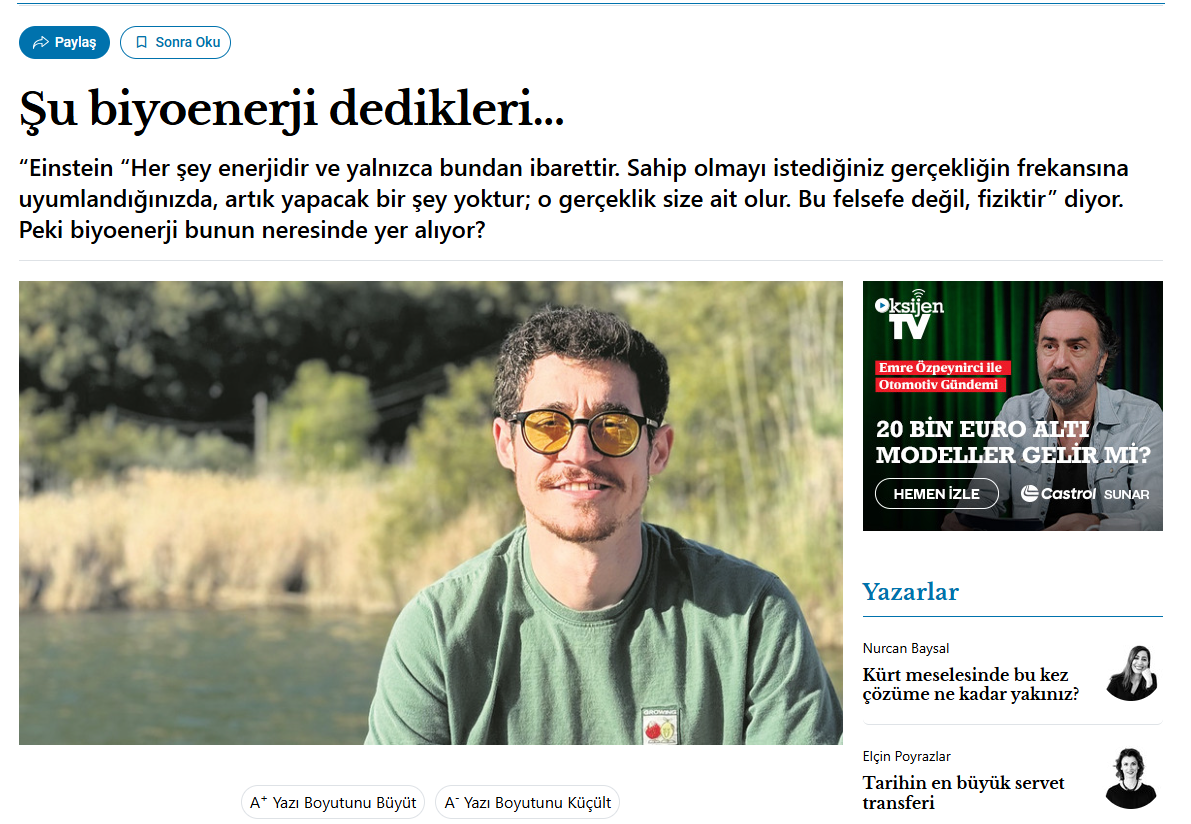
Osman Özerman-Biyoenerji Uzmanı/Healer
Bioenergy in the Modern World: Innovative Approaches
Today, city life and the stress, anxiety and worry that come with the modern world put all of us under intense pressure. Factors like work life, economic pressure, the speed technology brings, and the expectation of being constantly reachable all take a toll on our overall wellbeing. At this point, many people turn to complementary and holistic approaches in search of ways to cope with mental and emotional load. Bioenergy is one of the foremost among these approaches. It's a practice used to help restore the body's energy balance, with roots that trace back to ancient civilizations. That said, this practice should always be carried out by someone trained and experienced in the field.
Bioenergy is, in particular, a complementary support practice that can offer positive effects around stress management, habit transformation, and overall wellbeing. It is not a medical intervention or a healthcare service. Today, it has been reinterpreted through modern techniques and has grown more innovative. Alongside traditional methods, approaches that draw on scientific research and incorporate technology are expanding how bioenergy is used. Bioenergy is applied with the aim of working with the body's energy imbalances, helping to ease stress and support overall wellbeing.
Here are some of the more innovative directions bioenergy has taken in our lives:
1. Bio-hacking
Bio-hacking refers to using technology and scientific knowledge to optimize the body's biological processes. Today, bioenergy and bio-hacking techniques are increasingly being combined, with the goal of working with energy imbalances, supporting the body's functions, and enhancing overall quality of life. Small changes we can all make, such as moving in alignment with our circadian rhythm, limiting blue light exposure after sunset, and not reaching for coffee the moment we wake up, all contribute to this process. In bio-hacking, vibrational devices or electromagnetic field therapies aimed at the body's energy centers can be integrated into bioenergy work. Bio-hacking tools also now make it possible to track cortisol levels and measure the effects of bioenergy sessions using today's technology.
2. Aromatherapy and Bioenergy
Calming oils such as rose, lavender, mint and sage are used in bioenergy sessions to help support the body's frequency. The calming effects aromatherapy has on the mind and body can enhance the overall experience of a bioenergy session.
3. Frequency Work to Ease Energy Blockages
Every organ and system is associated with its own energy frequency. When these frequencies within the body are disrupted by stress, past experience or environmental factors, this may be reflected in a person's overall wellbeing. Bioenergy practitioners aim to work with areas experiencing lower-frequency blockages, seeking to restore the flow of energy in those areas.
Where blockages are present, the aim is to help clear them. If you'd like to explore this topic further, I'd recommend looking into writings on energy and consciousness, including popular contemporary authors such as Joe Dispenza. A bioenergy practitioner may be able to help ease energy blockages or support you in moving away from certain habits, but if you keep returning to the same environments or circles that originally contributed to the pattern, you may find yourself back in the same cycle after a while. The responsibility for that ultimately rests with you.
4. Remote Bioenergy Sessions
Much like the online meetings that became part of our lives during the Covid period and have since become the norm, it's now possible to take part in bioenergy sessions, yoga or breathing exercises online, from different cities or even from anywhere around the world.
A note on sourcing: the closing line in the original draft attributed the quote "Everything is energy and that's all there is to it..." to Albert Einstein. This is one of the most widely circulated misattributions online, its actual origin traces back to a 1996 spiritual channeling text by Darryl Anka, and there's no evidence Einstein ever said it, it doesn't appear in the definitive "The Ultimate Quotable Einstein" collection. I'd suggest leaving it out or replacing it with a verified quote to protect the credibility of the piece.